


Happy Saturday, friends.
And Happy 4th of July to my fellow Yanks!
Every day, millions of people step onto the stage of the New York City subway theater. They’re not looking for an audience. They simply go about their quotidian existence.
Daydreaming. Eating. Reading. Clipping their toenails (yes, that too). Or simply retreating into the quiet spaces of their own minds where they can squash the mental bugs or play footsie with them.
But for a storyteller, a crowded train or a busy platform is a masterclass in observation.
I’m not a big fan of photojournalism (factual events for public record). I prefer thinking of what I do as narrative truth.


When I edit a photo, I intentionally manipulate the light, texture, and shadows to evoke an emotional response or highlight a human archetype. I’m not claiming to document a news event. I’m framing a story. Or at least that’s what I think I’m doing. Narrative architecture. Pretentious? Maybe. Still, it’s all about storytelling. Even when it’s not (as a colleague would say.)
Let me say from the outset that I hesitated to post some of these images.
As a street photographer, I know that shooting in public spaces is entirely legal. But ethics don’t live in codebooks. To say they’re rooted in human empathy is… pretentious. But that’s the neighborhood where they pay rent.
The subway is a unique space. A public square without the square. It’s where people are at their most tired, vulnerable, and unguarded. The individuals in these portraits did not know I was taking their photos. Well, except for the aging rocker with long hair and glasses. He spotted me and graciously posed. But that’s a rarity in New York.


So I run every image through a strict internal filter before sharing it. My goal is never to catch someone in an embarrassing moment or to “punch down” for a clever shot. I don’t analyze my reasons for taking photos, but I’m sure there are reasons. I just hate looking under the hood of my own car. If an image strips someone of their basic dignity, it gets deleted or stays on my phone (I only use my iPhone in the subway so my subjects think I’m playing a video game.) Hence, the open offer:
Dear fellow Homo sapiens! I’m an NYC street photographer documenting the city’s narrative culture. If anyone recognizes themselves and wishes for their image to be removed, I will gladly take it down immediately. No questions asked.
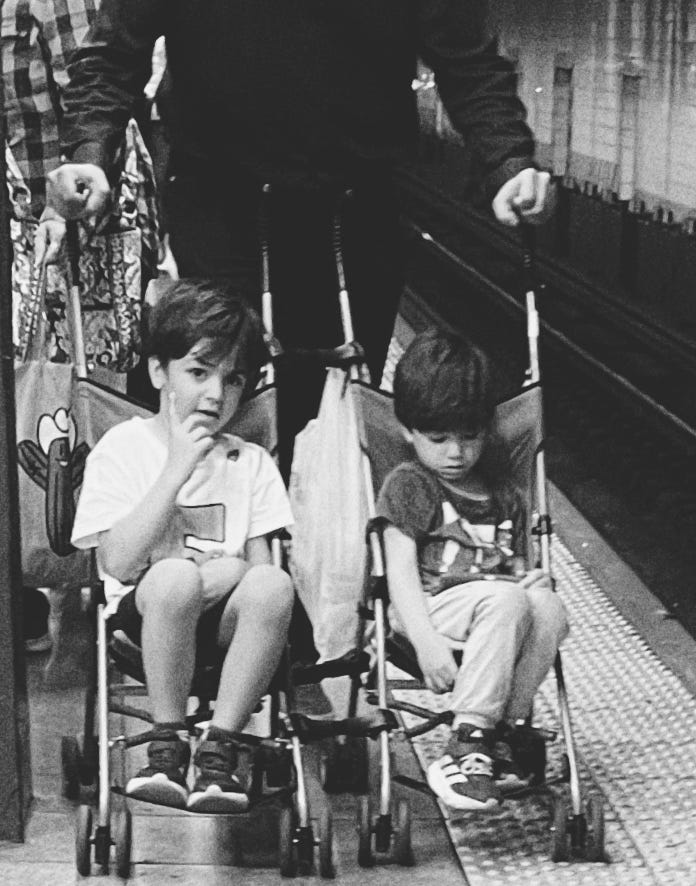
When I told my significant other about it, she quipped “Who do you think you are, Annie Leibovitz? Hundreds of thousands of people would have to subscribe to your Substack to recognize someone who knows someone who may look like someone in your photo. Come down to earth, love.” Thanks for the encouragement, sweet pea.
This finally brings me to the advice-giving section. I like to give advice even on things I’m not an expert on. Like football, for instance. Last night, during the game between Argentina and Cape Verde, I suggested Messi go low with his second penalty kick. Bad advice. In the end, Argentina won. But barely.
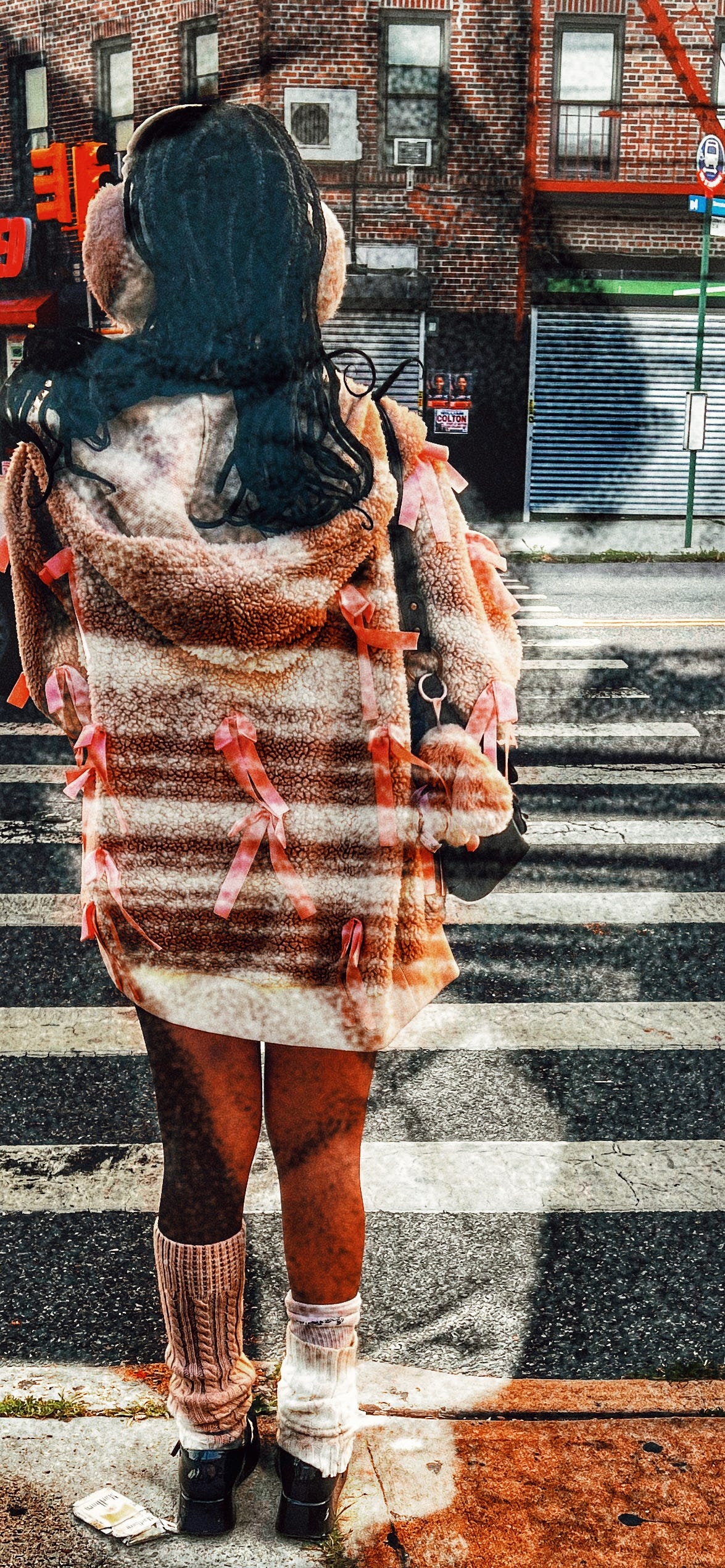
What I’m saying is take my suggestions (below) with a grain of kosher salt. You’re welcome.
1. Look for the Disruption / The Contrast Technique
A crowd is a bunch of folks doing the exact same thing: staring at their phones while seated or staring at their phones while standing. Stories begin when that repetition is disrupted.
Train your eyes to look for the visual contradiction. Someone carrying an object that completely clashes with who they are or their environment. A flash of vibrant color in a grey concrete station. A person moving at a completely different pace than everyone around them. Contrast creates an instant narrative question in the viewer’s mind: Why in the f* is that there?
2. Isolate the Axis / The Silhouette and Geometry Technique
Clutter to a busy city is what smack is to a drug addict. But to find the story, you have to find the clean lines.
Isolate a single person against the geometry of the city. How a fading brick wall elegantly frames someone’s back. How a subway window cuts a near-perfect profile. Or how a shadow makes a powerful silhouette. By framing a person against clean lines, you elevate them from a mere pedestrian into an Ubermensch.
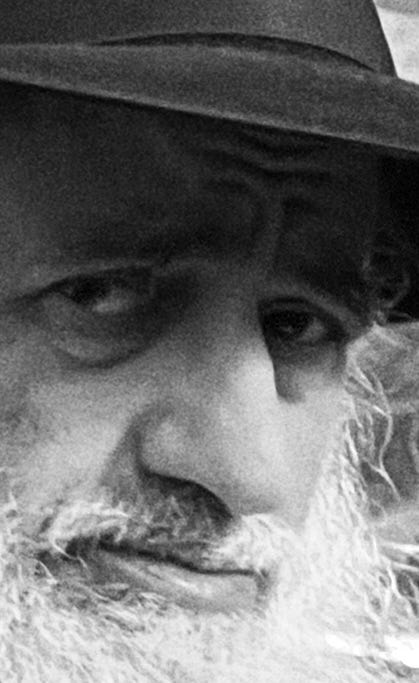
3. The Power of the Close-Up / The Intimacy Technique
On a train, we are forced into a less-than-natural closeness with strangers. If you look past the collective crowd and closely at the micro-details, the world opens up.
The tilt of a head. The glasses catching the transit light. The specific angle of a fresh haircut. They are a reminder that every “background extra” we pass on our daily commute is actually the protagonist of their own complex drama.
So, when you get on the train in NYC (or wherever subways, tubes, or metros run), look away from your phone for a moment. Observe the people around you. Each person is a protagonist in a story you haven’t read.
Thanks for reading and being a subscriber.
See you on the next platform.
ak

Wonderful, Alex! You are a great photographer of human complexity. I am honored to have been the subject of a few.
Again, great photos and supporting essay. You've got the cajones to take close ups like that. But well worth it. Hope you have another gallery show coming up soon.