

Happy Saturday, friends, and friends of friends!
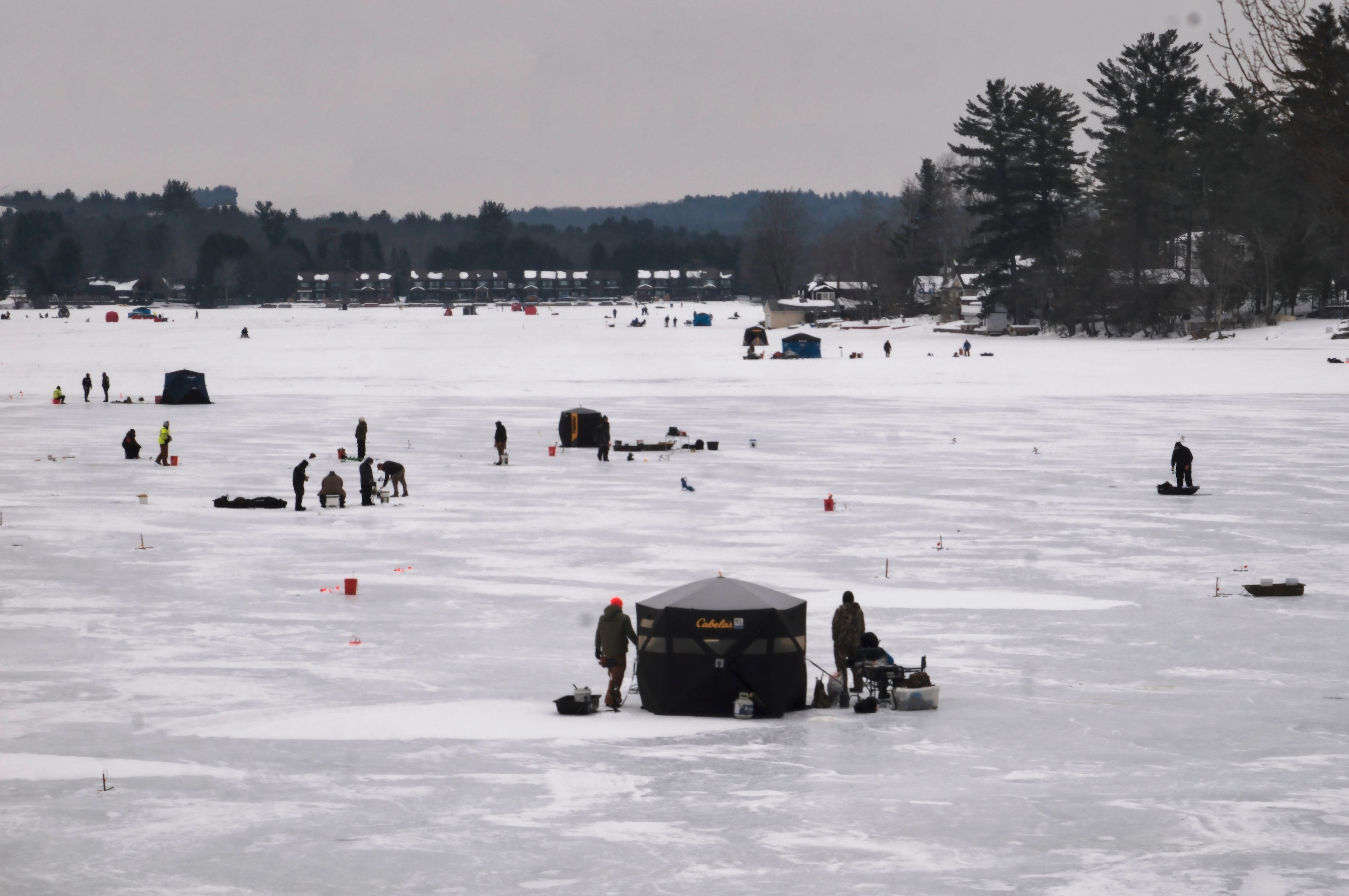
Last weekend I drove up to White Lake in upstate New York and found the surface of it dotted with the small, still shapes of people, each one stationed over a hole in the ice, waiting. From a distance they looked like chess pieces left out on a board.
They were ice fishing. Why would anyone do this? Why drive to a frozen lake in February, drill through a foot of ice, and sit there for hours for a fish you could buy at the supermarket for twelve dollars? The question nagged at me all the way home. So I went looking for an answer. I’m not going to bore you with historical and archaeological evidence I found in encyclopedias and almanacs. Suffice it to say that ice fishing goes back 2,000 years, even before I was born. For the Indigenous people of North America, it wasn’t a hobby. It was how you ate in winter.
A hole in the ice was made with a bone or a stone tool. A line made of plant fiber, weighted with a small stone and baited with a piece of some sort of flesh, preferably the backside of a maggot. And then… an exquisitely carved decoy, of bone or stone, was lowered beneath the surface of the water to attract a perch or pike.
Later, European settlers adopted those techniques (what didn’t they adopt, those Europeans?!). By the 20th century, ice fishing had fully made the transition from necessity to tradition.
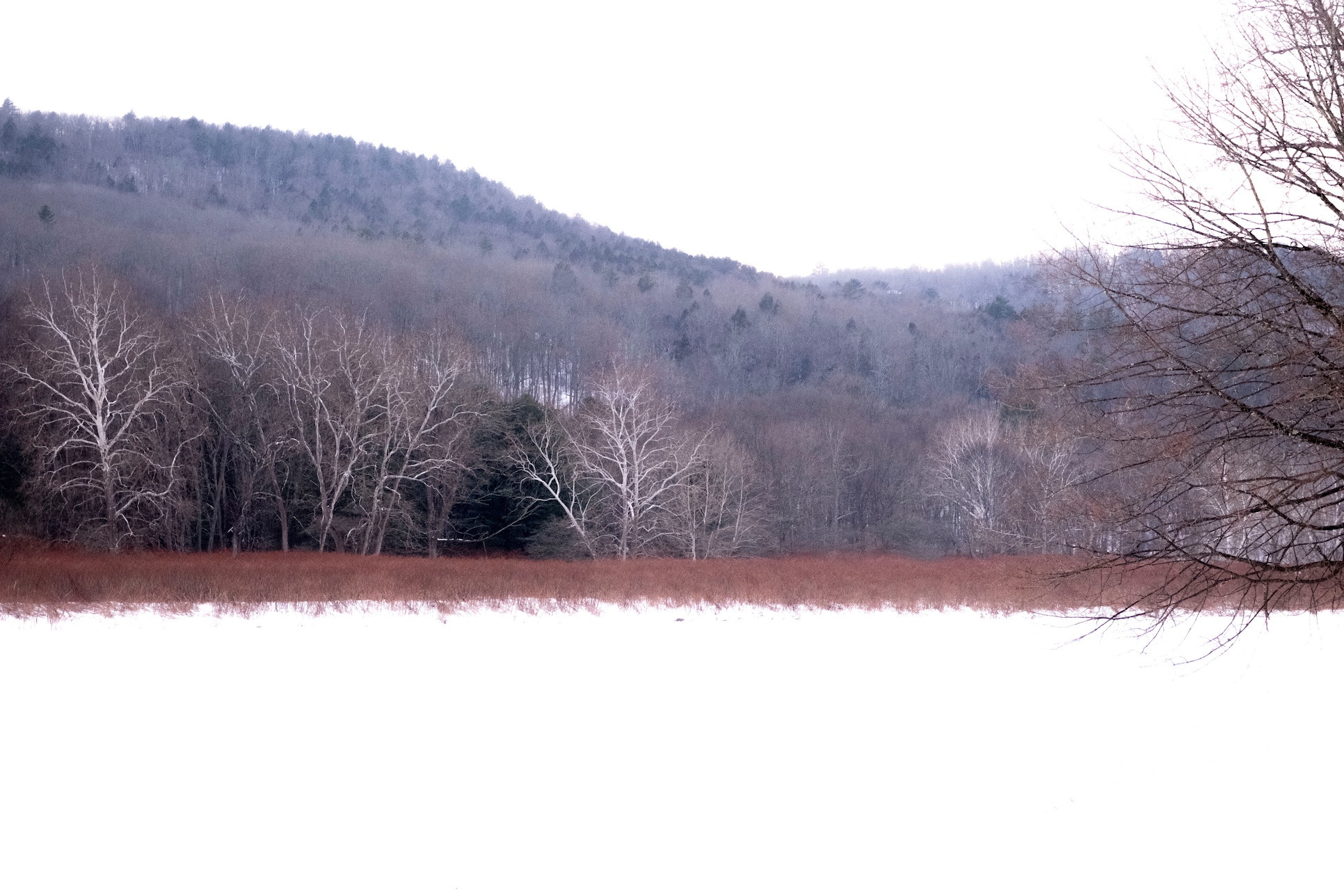
But here’s what I found out by talking to those jokers: There’s a social world on a frozen lake that’s invisible from the shore to the naked eye.
If you’re brave enough to drive out to a popular ice fishing spot on a Saturday morning in January or February — White Lake, Lake Champlain, Oneida, Saranac — you’ll find something that looks less like fishing and more like a small, multi-ethnic neighborhood. Clusters of shanties (that’s a word for you, you strangers to the King’s English. I’ve always thought a “shanty” was a folk song sung by tattooed sailors to coordinate labor. But it turns out that’s a “sea shanty,” while a “shanty” is a crudely made hut or cabin), and snowmobiles parked in rows. The smell of propane, coffee, and intestinal gas. People moving between holes, comparing notes, checking each other’s tip-ups, sharing food. Children running across the ice in snowsuits. Dogs.
Ice fishing has always been communal in a way that summer fishing often isn’t. Part of this is practical. You need to know where the ice is safe, where the fish are running, which spots the grizzly old-timers favor and why. That knowledge passes from person to person, generation to generation, and in the process creates relationships. Regulars at the same lake accumulate years of shared memory. The grandfather who brought his son, who now brings his daughter. The group of friends who have been coming to the same stretch of ice for twenty winters. These are the invisible structures underlying all those still figures you see from the shore.
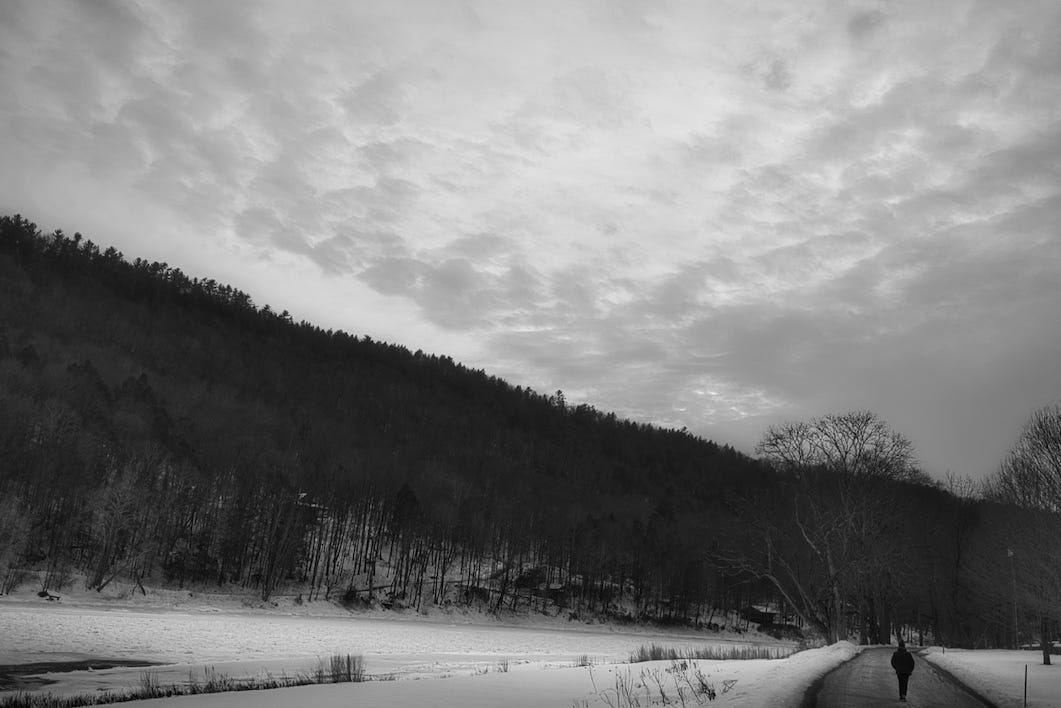
The shanty itself is central to this culture. I spoke to a digital forensics expert who is obsessed with ice fishing and shanty decorations. His shanty is just a plywood box on runners, big enough for two people and a heater. But his is personalized with the names of relatives, former lovers, dead dogs. It has insulation, bunk beds, television. He hauls his out to White Lake each season, and it represents decades of use and modification. The shanties are the most intimate kind of architecture: small, warm rooms built specifically against the cold, designed for waiting together.
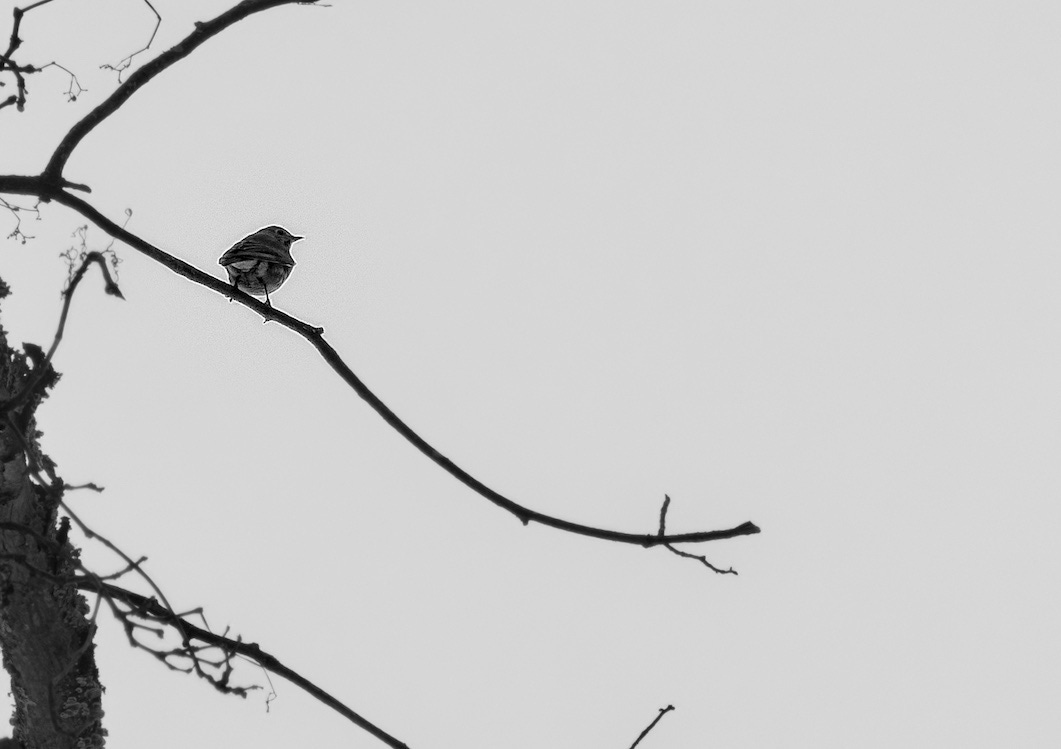
The thing that non-fishermen find hard to understand is that for many ice fishermen, catching fish is secondary. The fish are a bonus. What people are actually there for is harder to name.
Enforced stillness? Permission to do nothing? In an era of relentless productivity and non-frigging-stop digital noise, the ice fishing hole is one of the few reasons to sit somewhere cold and quiet and simply be. You cannot check your email. You cannot optimize your fishing hole. You can only wait, and look at the ice, and look at the sky, and talk to whoever is beside you, and wait some more.
There’s definitely something meditative about it, and people who ice fish seriously will often describe it in those terms. The cold keeps you present. The silence does something to the mind.
Winter, for most of us (not me, I’m from the old, cold country), is something to be endured. Ice fishermen have found a way to inhabit the winter. Kudos to them!
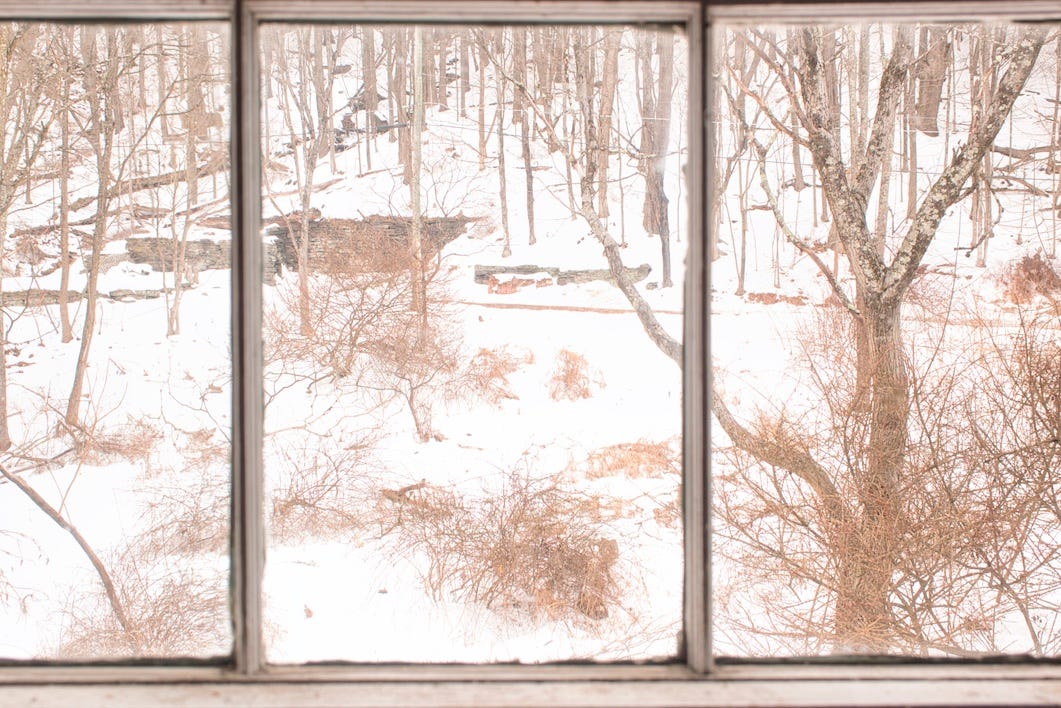
You might expect ice fishing to be in decline in an age when people fish for leisure on boats with climate-controlled cabins. In fact, the opposite is true. Ice fishing has been growing steadily in popularity across the northern United States and Canada, with younger folks entering the sport (and the pastime) in numbers that have surprised even its longtime devotees.
Some of this was accelerated by the pandemic, when people who had never before considered spending a Saturday on a frozen lake discovered that being outside in winter was genuinely wonderful. Some of it is social media, which has made the aesthetics of ice fishing, the vast white landscape, the drama of a catch pulled through the ice, newly visible and appealing to audiences who’d never encountered it before.


Also, many young people are actively seeking out activities that require patience, that unfold slowly, that cannot be rushed. The fish does not care about your urgency.
iPhone is bad. Ice fishing is good.
Standing on the shore last weekend, watching those figures on the ice, I understood something I hadn’t even thought about before. Those jokers weren’t there despite the cold and the waiting. They were there because of it. The frozen lake in winter is one of the last genuinely unhurried places left. Going out onto it is a choice to slow down in a world that has largely forgotten how to do it.
The point is not the fish. The point is the ice. And the silence. And the person sitting next to you in the cold. And the fact of being somewhere on purpose with nowhere else to be.
The point is not the fish. The point is the ice. And the silence. And the person sitting next to you in the cold. And the fact of being somewhere on purpose with nowhere else to be.

The Little Prince by by Antoine de Saint-Exupéry is one of the greatest books ever written. You can read it in English for free here.
Filmmakers and actors in the Criterion Closet choosing films made by David Lynch. I wish I could join them.
A great, 12 min. live performance of It’s Good to Be King by the great Tom Petty.
Thanks for reading and being a subscriber.
’Til next time.
ak
A well wrought essay about a well worn nordic tradition. I used to ice fish with my brothers and stepdad years ago. Nothing like pulling in a passel of perch or a huge pike or lake trout. Your adventure brought back memories - it did indeed.
What good timing that I read your newsletter, Alex. We just finished watching the film, Dead of Winter, on HBO with Emma Thompson. At the beginning, I said to myself, why would anyone go at the dead of winter to ice fish? Well, there's more to the story than that but her character drove up to a Lake in Minnesota by herself during a snowstorm. Thanks for the backstory, Alex. Much appreciated!