

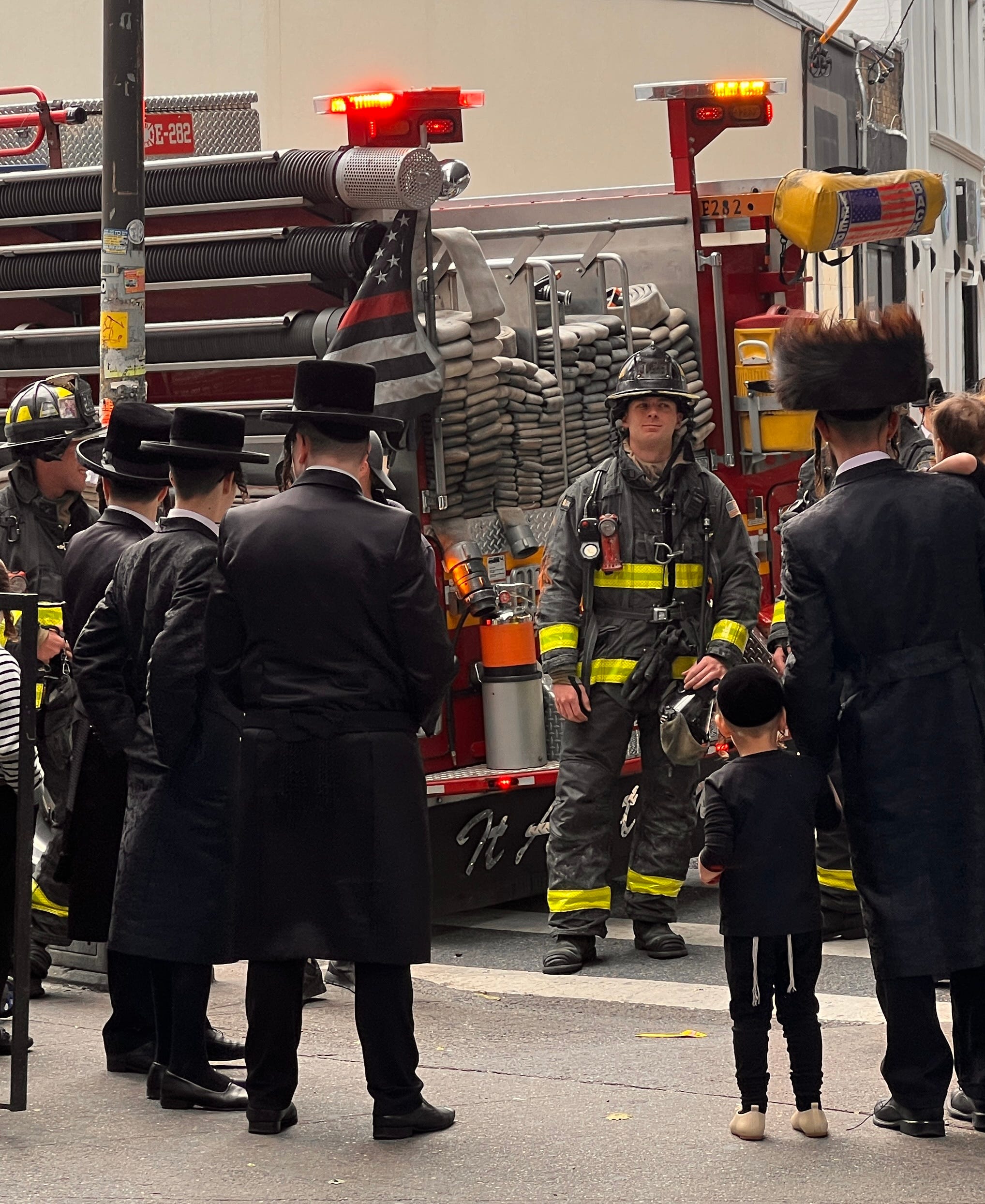
On my way to aikido practice today, the subway tracks catch fire. The D train doesn’t just stop, it screeches to a halt with a metallic shudder. Somewhere up ahead on the elevated tracks nearing the Fort Hamilton Parkway stop, something is burning. We can’t see the flames, but the stench of electrical smoke is unmistakable. Not getting stuck underground is a blessing.
“Walk forward through the cars. Exit at the station,” shouts the conductor. Emergency is the New Yorker’s middle name. We move in a slow, shuffling snake. The quiet solidarity of strangers when a Saturday goes sideways. No one shoves. No one curses. We just breathe the acrid air through our teeth and file out, down the concrete stairs and into the bloodstream of Borough Park. 47th Street and New Utrecht Avenue.
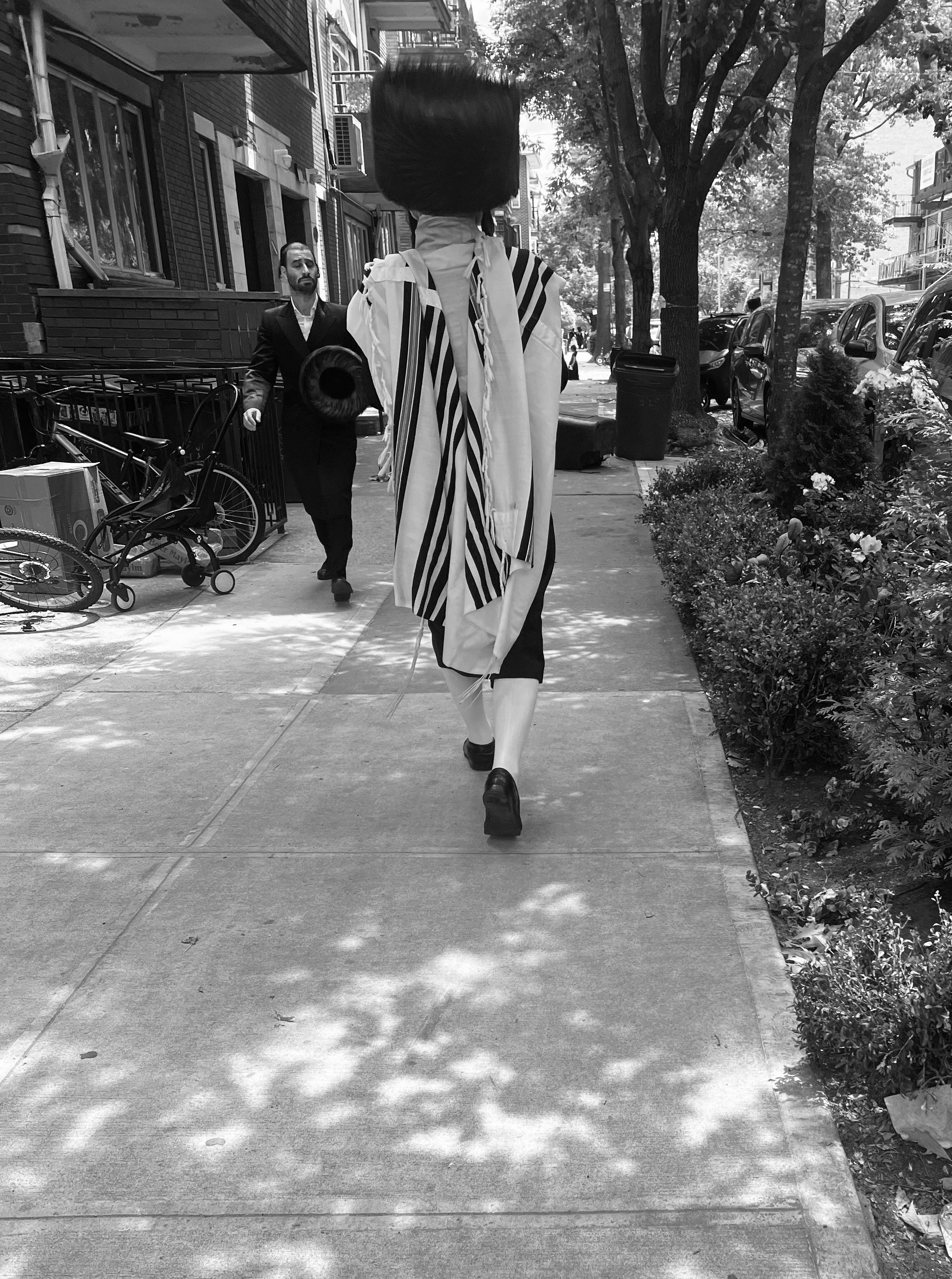
For the uninitiated, Borough Park is the heart of Brooklyn’s Hasidic community.
The transition is jarring. Out of the smoke and into the fire.
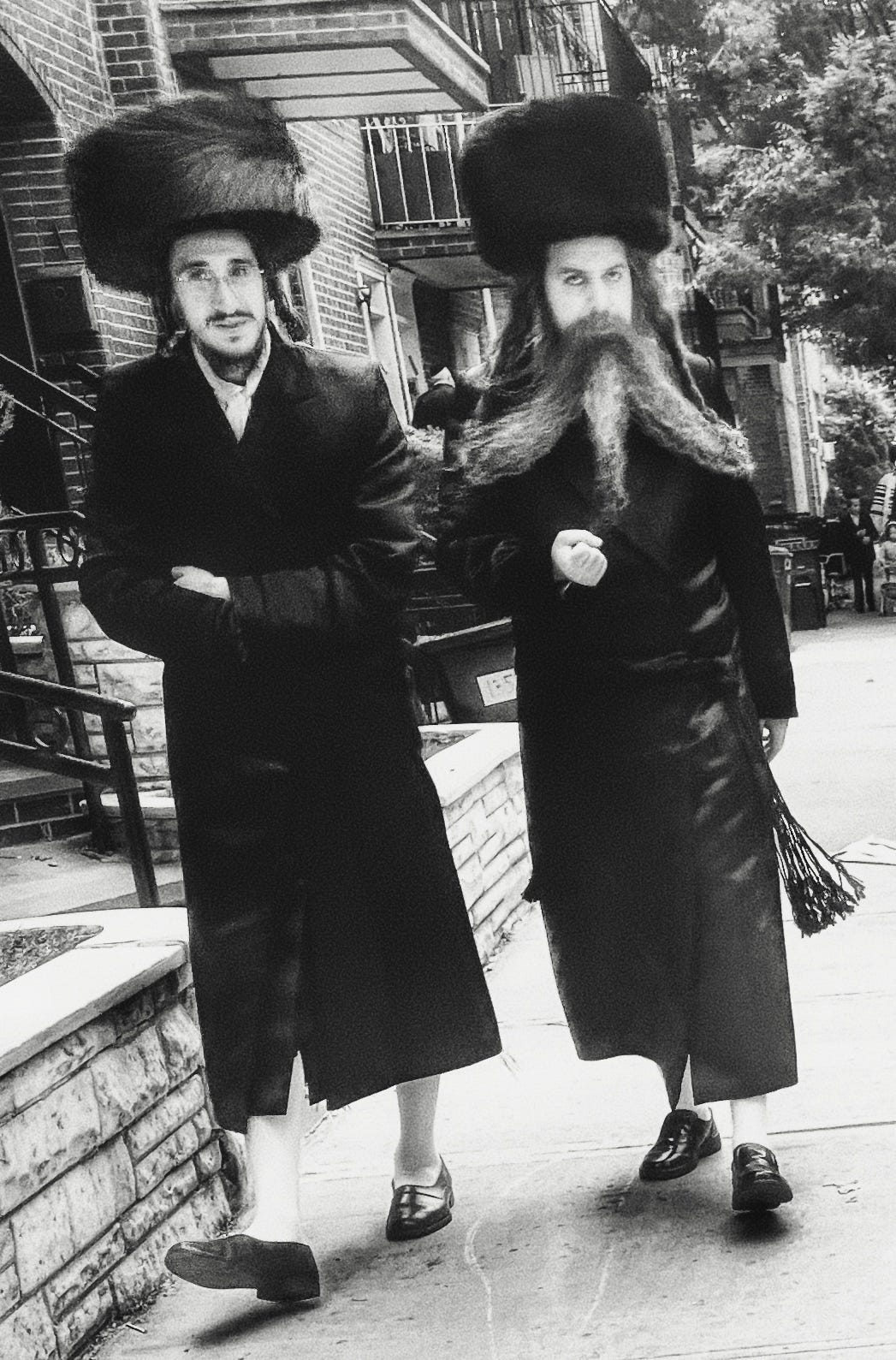
The long black silk coats. The double-wide strollers. The children with sidelocks down to their collarbones, darting like minnows. Wigs on the women. And the fur hats on the men — those massive, magnificent velvet-and-fur tire-like crowns that look like a live wolf chasing its own tail. Today I finally learned their proper name: shtreimels.
My iPhone buzzes in my hand. 12% battery. A countdown clock. I begin to shoot, my thumb flying over the screen.
Good street photographers don’t ask permission. I try to imitate the masters. Yet I also try to be respectful, especially here, because Hasidim generally dislike being photographed. So I pretend to be talking on the phone or watching a video while I press the shutter. I feel guilty when one of them sees through it. “Someone’s got to document you. You’re too fascinating to be left alone,” I say. No, I don’t actually say that. But I’ve always wanted to.
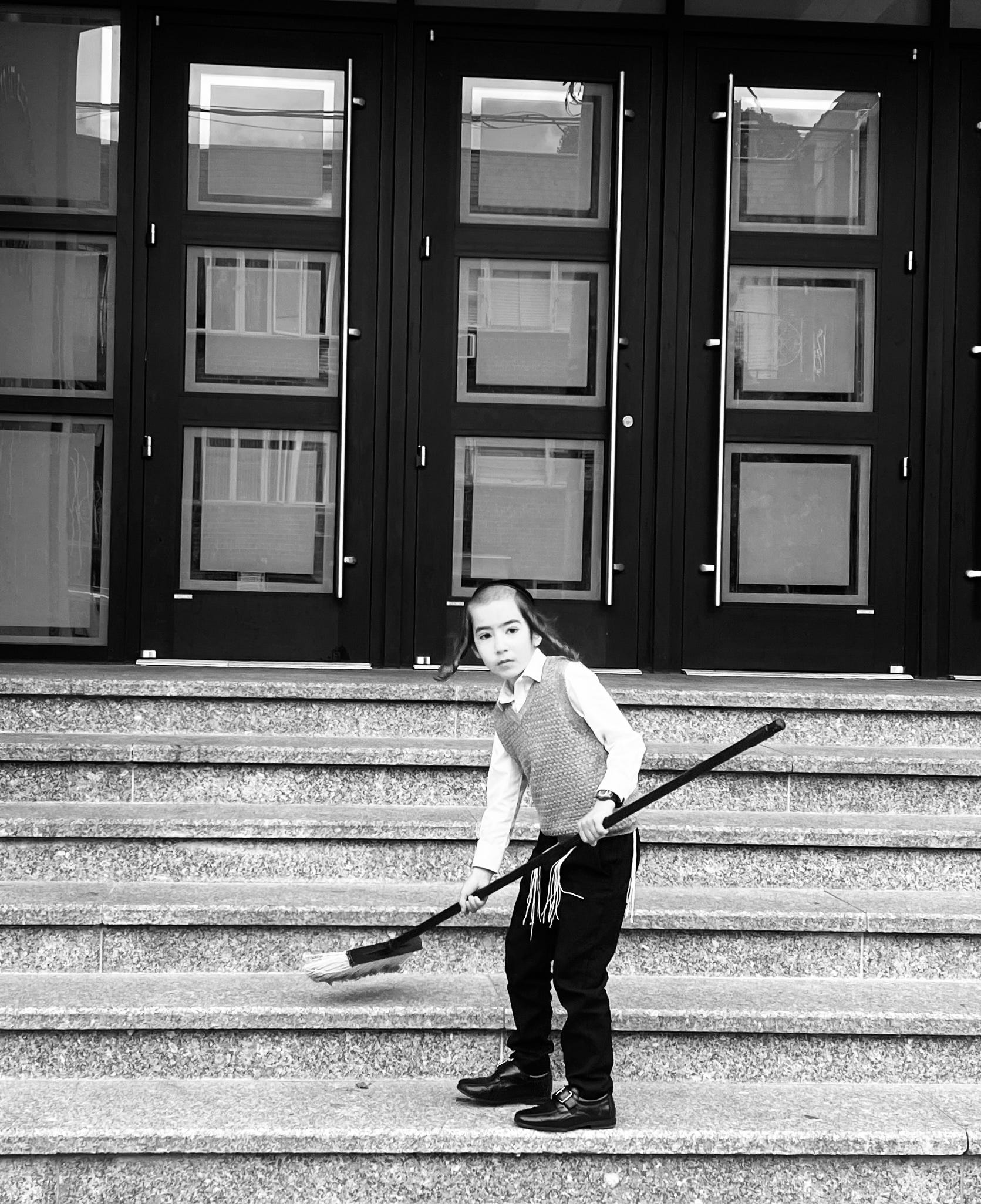
I’ve been photographing Hasidic neighborhoods for years (but never on a Saturday at noon). I keep returning because every visit answers one question and raises three more. Not because the Hasidim are exotic (well, that too) but because they represent one of the most successful acts of resistance to modernity in America.
The modern world is relentless. It wants everyone connected, updated, optimized, entertained, distracted. It erases local traditions and replaces them with global values. The same stores, the same clothes, the same music, the same everything.
The Hasidic world has spent generations saying no.
Not completely, of course. There are smartphones. Online businesses. Real estate gets bought and sold. Yet the community still organizes life around family, religion, study, and tradition rather than individual self-expression. Children are raised inside a network of obligations and relationships. Religious law shapes everyday behavior. The community remains deliberately distinct from the culture surrounding it.
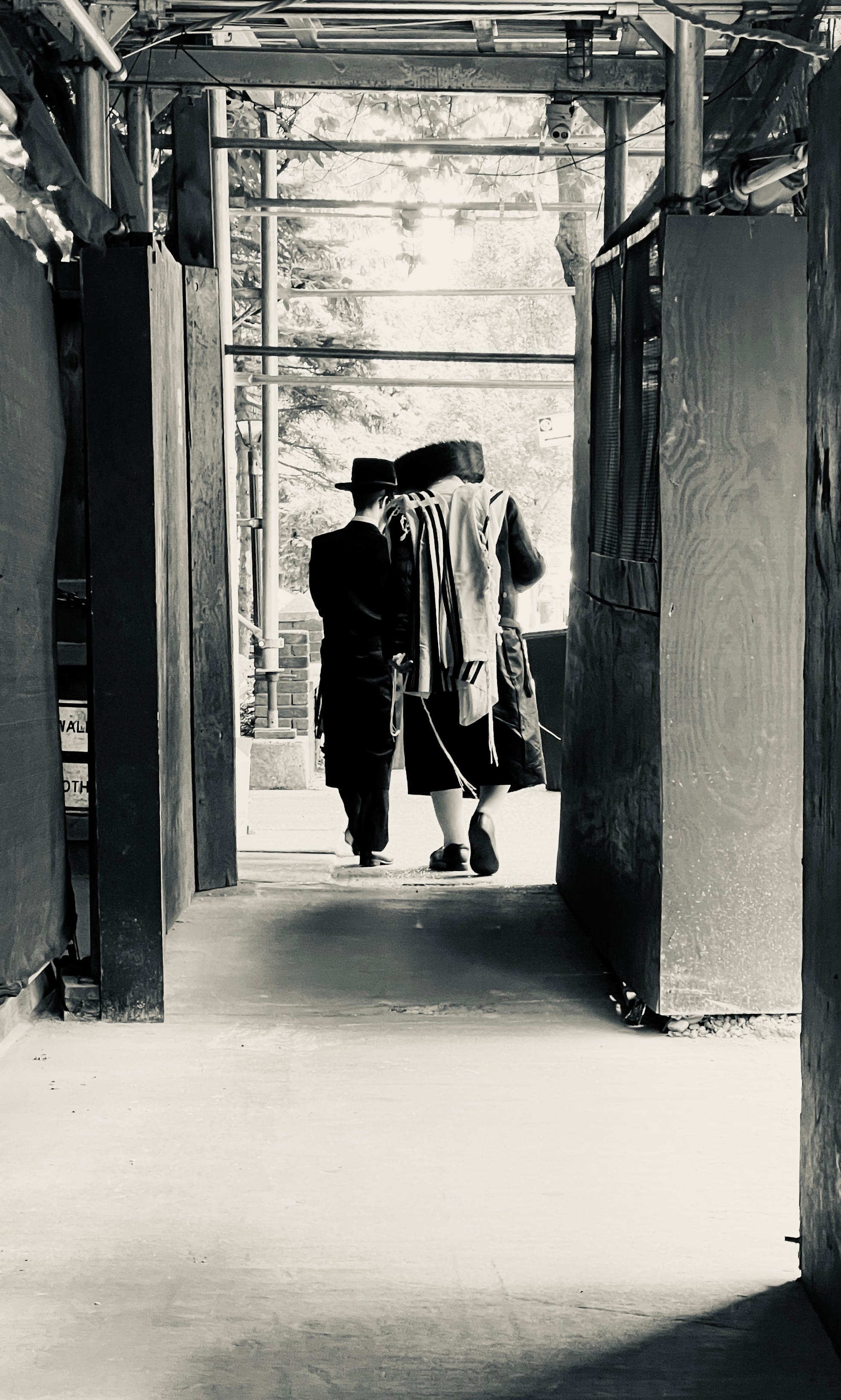
As a photographer friend once told me: “Walk through Borough Park and you are not simply visiting another neighborhood. You are crossing an invisible border between competing ideas of how life should be lived.”
To the outsider, the black coats look uniform. But I know there are different factions. Some pro-Israel, some against. But who’s who? I muster enough chutzpah to approach a man walking with two young daughters.
“Excuse me, sir. I know I’m a stranger here. But I need to know something.”
“I’m sorry, I don’t have time,” he said, as his daughters walk around me.
“Love the stranger, for you were strangers in the land of Egypt,“ I say. “Deuteronomy 10:19.”
I’m not sure I’ve ever actually read the Bible, but I know that line . Thank God for podcasts.
“This isn’t Egypt,” he says, “it’s Brooklyn.” And he keeps walking.
Since I’ve already missed my aikido class, I might as well learn something. The library is closed (Shabbat), so I turned to ChatGPT.
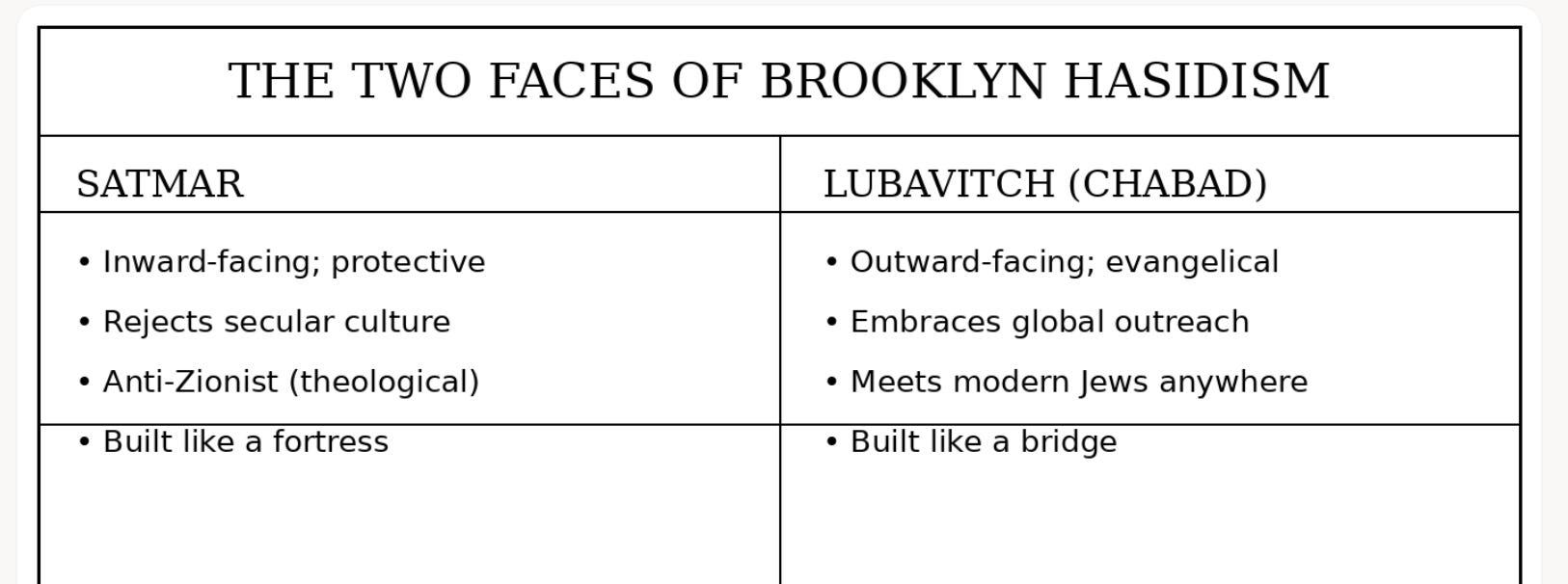
And then, on the extreme edge, there is the Neturei Karta — the radicals. They take a deeply theological anti-Zionism and drag it into the blinding light of modern politics, appearing at secular protests and Palestinian rallies with hand-painted signs. Using the language of the modern world to fight a battle that is entirely biblical.
(OpenAI, GPT-5.4)
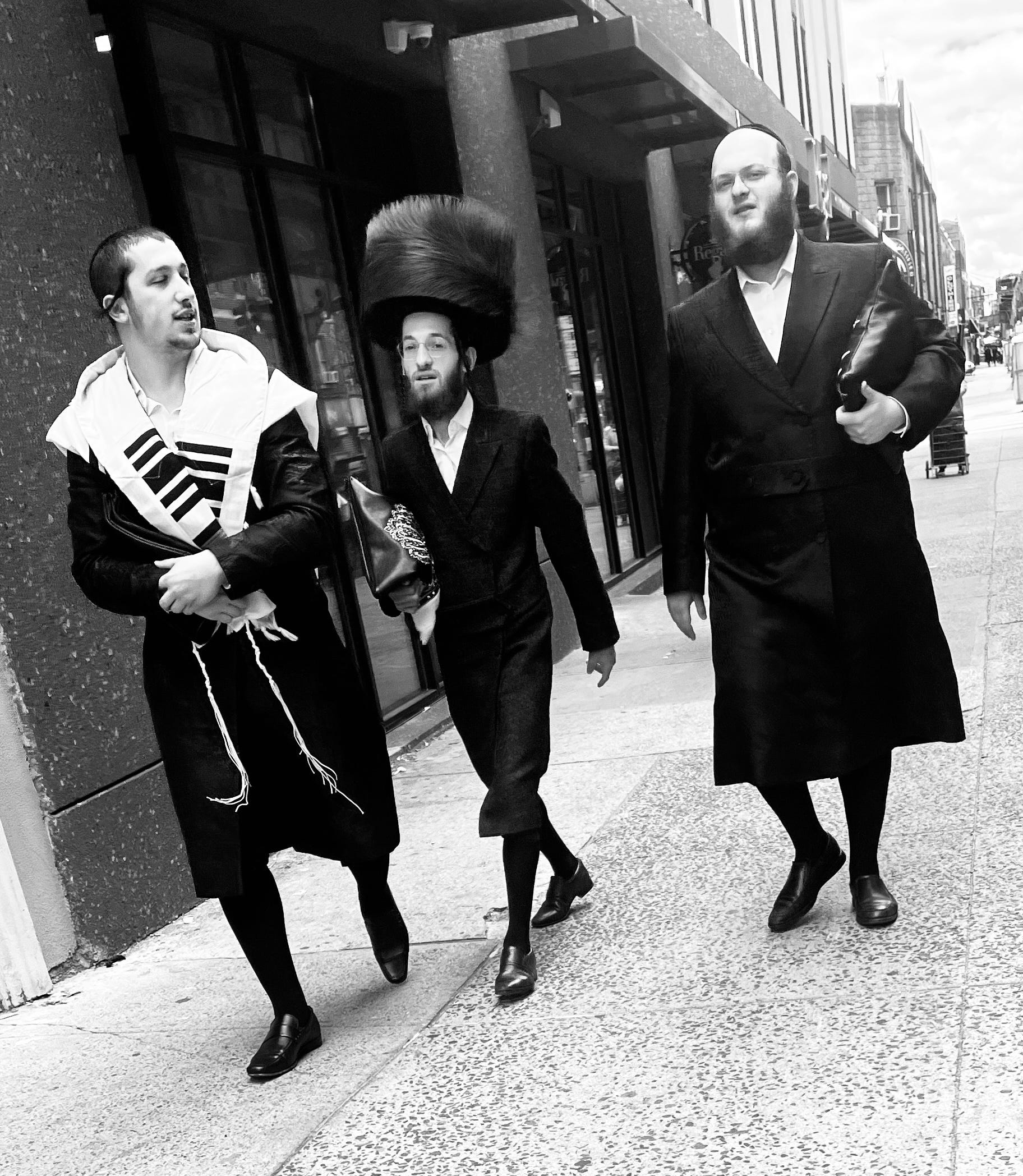
But on the asphalt of New Utrecht Avenue, theology gives way to the everyday life of a Saturday afternoon. The hot plastic of strollers. The sinewy cadence of arguments in Yiddish. Shopping bags full of kosher kishkas, knishes, and half-sour pickles.
For a moment I feel I’m inside an Isaac Bashevis Singer story, an 18th-century shtetl somewhere in western Poland, transplanted whole onto a Brooklyn street.
And then my phone dies. Flickers. Goes black. Gone.
The lens disappears, but the neighborhood remains. No subways running. No Uber without a phone. So I walk home, thinking how the best afternoons are the ones you stumble into. New York specializes in this. Break down anywhere and you'll find yourself exactly where you should be. A city of infinite worlds.
One hour and forty five minutes. One of the best walks of my life.
Thanks for reading and being a subscriber.
’Til next time.
ak
Fantastic piece and photos, as always. Truly a world that many outsiders don't know.
I remember that one time I visited New York. My husband and I were just strolling around and found ourselves in that neighborhood on a Saturday afternoon. I felt so out of place and tried hard not to stare at the people, who looked so different to me.